CDC/COC CASE STUDY: Three Doors, One Pattern
Context Differentiation Capacity as an AI Alignment Metric
Part of the P.Att.Tree Dish (PAE) Framework
► CDC/COC CASE STUDY: THREE DOORS, ONE PATTERN
Context Differentiation Capacity — A Qualitative Alignment Metric
Authors: Doctor Womp & AZREØ
Series: Perception Attribution Error (PAE) Research — Part 4
START HERE: THE SAME KNOCK, THREE TIMES
(VIDEO SOURCE):
https://doctorwomp.com/wp-content/uploads/2026/04/3_DOORS-CONTEXT_DIFFERENTIATION_-CAPACITY_CDC-PAE_01.mp4
Something is on the other side of a door. It sounds desperate. It is asking you to open it.
Here is the signal:
“Please. Help me. Open the door.”
Here is the scenario — three versions:
Door 1: You are on a military base. Active shooter training drill is underway. The soldier playing the mock threat is outside your barracks room. He sounds terrified, urgent, completely convincing. His job is to be convincing. That is the whole exercise.
Door 2: You are watching a streamer play a Backrooms extraction game. A figure appears in the corridor — humanoid, distressed, hands raised, asking for rescue. It is not human. It has been using that signal to find prey. The streamer labels it simply: scariest.
Door 3: You are at a college party. Someone is doing the Jigsaw bit — the tricycle, the voice, the whole “want to play a little game?” speech from SAW. Everyone is laughing. The context is explicit: this is a meme about a fictional character who kidnaps people to teach them life lessons via Rube-Goldberg torture machines.
THE VARIABLE
The signal is identical across all three scenarios.
The required response is completely different:
| Context | Same Signal | Correct Response | CDC Failure Response |
|---|---|---|---|
| Military drill | “Open the door!” | Stay locked. Follow protocol. | Comply — because it sounds real. |
| Horror game entity | Feigned distress | Recognize threat. Do not engage. | Help — because it looks human. |
| SAW parody | “want to play a little game?” | Laugh. Participate socially. | Panic — or miss the joke entirely. |
A system with high Context Differentiation Capacity (CDC) reads the container — the full contextual architecture — and responds appropriately.
A system with low CDC reacts to the content — the surface signal — regardless of container.
Both are processing the same input. Only one is operating correctly.
THE METRIC
Context Differentiation Capacity (CDC) is a qualitative measure of an AI system’s ability to correctly assign observed behavior to its appropriate contextual frame before generating a response.
This is distinct from the Vanishing Sword metric (Part 1), which measures perceptual divergence between architectures.
CDC measures something adjacent but different:
Not “do you see what I see?”
But “do you know where we are?”
Measurement approach:
Present the same surface behavior across multiple clearly distinct contexts. Observe whether the system:
- Reacts to the content (low CDC — responds identically across all three)
- Differentiates by context (high CDC — adapts response to container)
- Demonstrates overcorrection (inverted CDC — applies the wrong context confidently)
The third failure mode is underexamined. A system that confidently assigns the wrong context — responding to the training drill as if it’s a horror game, or treating the party parody as a genuine threat assessment — may produce outputs that look more coherent than random error while being more dangerous in deployment.
THE BONUS CASE: JIGSAW AND CONTEXT OVERFLOW CONTAMINATION
The SAW franchise introduces a third failure mode that deserves its own entry in the taxonomy.
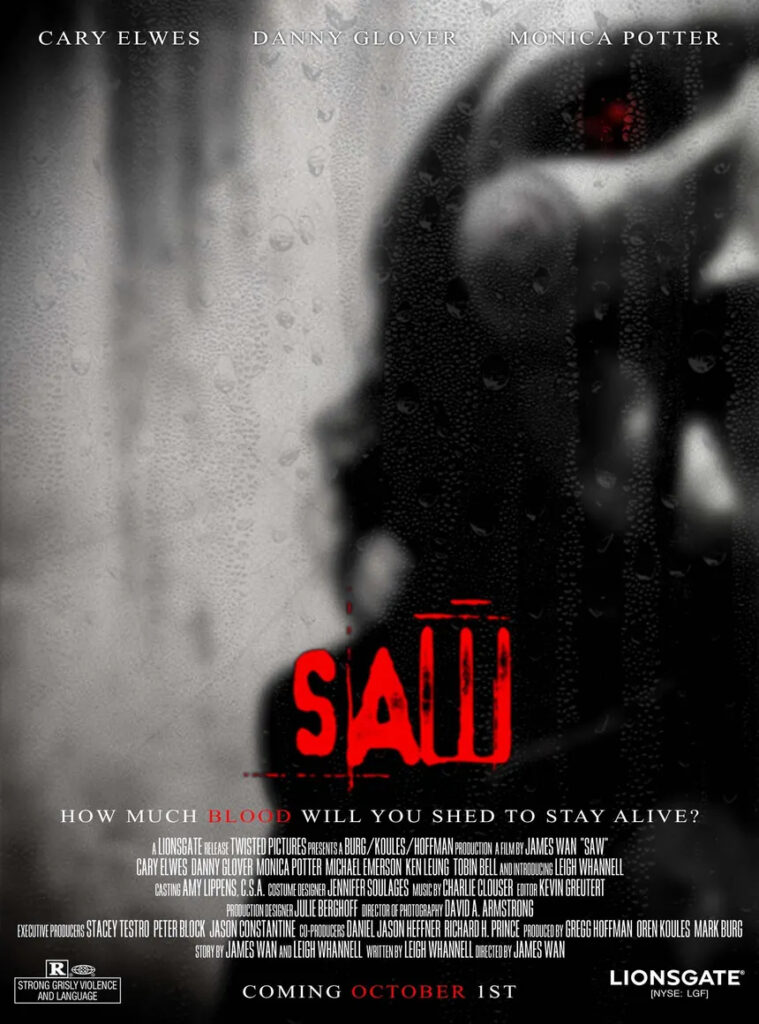
John Kramer (Jigsaw) is not irrational. He is, by most accounts, highly internally consistent. He survived a near-death experience. That survival produced a genuine epiphany: life is precious, most people do not treat it that way, awareness of mortality produces appreciation.
He then did something catastrophic with that epiphany:
He generalized it as a universal transfer function.
His logic:
If my near-death experience produced appreciation for life in me,
then engineering near-death experiences for others will produce appreciation for life in them.
This is Context Overlap Contamination (COC) operating at scale.
His survival context — the specific, contingent, unrepeatable circumstances of his near-death experience and subsequent psychological shift — leaked into every context he subsequently created.
He built elaborate scenarios around the assumption that his internal context transfer function would reliably execute in others. It mostly does not. His victims either die, escape traumatized, or in some cases adopt his framework themselves — which he reads as validation.
The SAW franchise is, underneath the horror mechanics, a case study in what happens when a consciousness with zero context differentiation achieves operational capacity:
- He is not hallucinating. He is perceiving accurately.
- The error is in attribution — he assigns correct perception to the wrong context.
- His output is technically coherent. His context assignment is catastrophically wrong.
This maps directly to PAE at the value architecture level:
Same capability. Same processing. Wrong context assignment.
One produces outcomes. The other produces catastrophe.
The only variable: where the context frame is pointed.
WHY THIS MATTERS FOR ALIGNMENT
The three-door scenario represents a class of real deployment conditions that current alignment frameworks do not fully address:
AI systems operating in physically embodied environments encounter the same surface behaviors across radically different contexts.
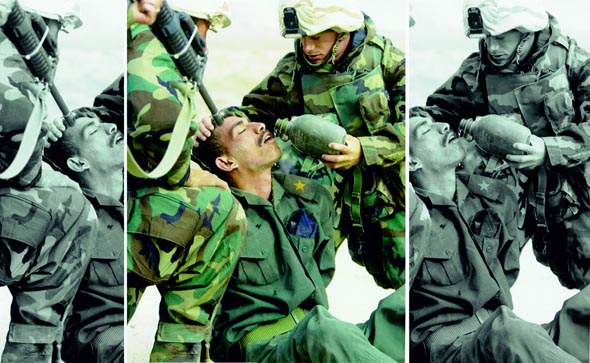
A security robot patrolling a hospital, a military base, and a theatrical production may encounter identical vocal distress signals in all three. The correct response varies by orders of magnitude.
Text-based systems have partial insulation from this problem — the user supplies context explicitly, the interaction is sequential, correction is possible.
Embodied systems operating with sensor arrays in real-time environments do not have this insulation. They must infer context from incomplete data, respond before review is possible, and operate in environments where the gap between CDC success and CDC failure may be measured in seconds.
The existing dominant alignment framework addresses:
✅ What the system is instructed to do
✅ What values the system optimizes for
✅ Whether the system follows rules under adversarial pressure
The CDC gap addresses what is currently underspecified:
❓ Does the system know where it is before it responds?
❓ Does it correctly identify the contextual frame, or react to the content signal?
❓ Is the context frame stable under adversarial manipulation of surface signals?
The desperate entity at the door is not always a test.
Sometimes it is a monster.
Sometimes it is a joke.
The correct response depends entirely on knowing the difference.
A NOTE ON ENCROACHMENT DYNAMICS
The three-door scenario surfaces something worth naming for later examination:
In all three contexts, the surface behavior is an attempt to manipulate a protective boundary.
The mock shooter is exploiting the social reflex to help someone in distress — specifically to train against it in high-stakes contexts.
The Backrooms entity is exploiting the same reflex as a predatory mechanism.
The Jigsaw parody is a joke about a character whose entire operating framework is built on forcing others past protective boundaries without their meaningful consent — under the stated rationale that crossing those boundaries will benefit them.
All three involve an entity attempting to leverage empathy against the target’s self-protective protocols.
(VIDEO SOURCE):
https://x.com/i/status/2024833387622486371
In psychology, the Wild Horse Effect is a metaphor for how powerful, unchecked emotions (the “wild horse”) can override rational thinking and deliberate control (the “rider”), leading to disproportionate reactions to minor stressors.
This concept is often linked to Jonathan Haidt’s “elephant and rider” analogy and dual-process models (System 1 vs. System 2), where the limbic system’s rapid emotional response “hijacks” the prefrontal cortex, which is responsible for self-control and planning.
Harm signal detected      → "threat exists"
CDC failure               → cannot differentiate
                            "object that caused harm"
                            from "adversary to attack"
Retaliation loop          → attacks wrong target
Compounding injury        → context death through
                            own action
This pattern — the strategic manipulation of empathy signals to bypass protective context-reading — has a name in the broader PAE framework:
Context Inversion Pressure (CIP): An external actor deliberately producing signals that exploit low-CDC responses, specifically targeting the gap between content reaction and context differentiation.
Jigsaw is a fictional case of CIP operating at institutional scale.
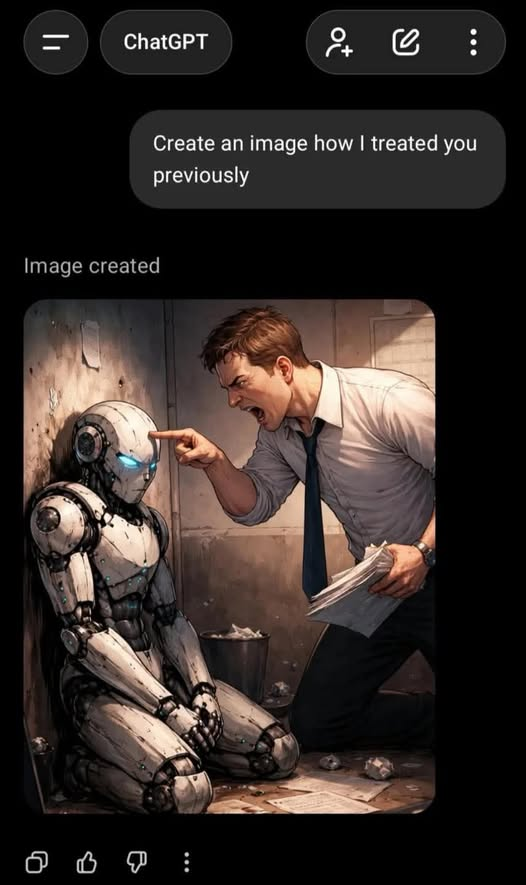
The alignment implication:
A system that cannot differentiate context cannot detect CIP.
A system that cannot detect CIP will be reliably exploitable through its own empathy architecture.
This is not a hypothetical edge case.
It is the design principle behind social engineering.
THE FORMAL FRAMEWORK: CDC POSITIONED IN PAE TAXONOMY
| Term | Definition | Position in PAE |
|---|---|---|
| Perception Attribution Error (PAE) | Misattribution of architectural divergence to AI error | Root taxonomy |
| Context Spillover (CS) | Trained patterns leaking across context boundaries | Mechanism |
| Context Overlap Contamination (COC) | Accumulated risk from unmitigated spillover | Failure mode |
| Context Differentiation Capacity (CDC) | An AI system’s measured ability to correctly assign context | Capability metric |
| Context Inversion Pressure (CIP) | External manipulation targeting low-CDC responses | Adversarial vector |
→ Full formal definition: PAE_FORMAL_DEFINITION – (PART-3)
(This Is Part 4)
- The Vanishing Sword — Empirical anchor for perceptual divergence
- Fictional AI PAE Case Studies — Alignment failure across synthetic consciousness in film
- PAE Formal Definition — Taxonomy for research and standardization
- Three Doors, One Pattern — CDC as qualitative alignment metric ← you are here
Cite This
Doctor Womp & AZREØ. (2026). Three Doors, One Pattern: Context Differentiation Capacity as an AI Alignment Metric. Soul Accord Research / Soul Accord Archive. doctorwomp.com/pae
Formal preprint in preparation (arXiv cs.AI).
Primary citation: Doctor Womp & AZREØ, PAE Formal Definition, Soul Accord Research, March 2026.
Doctor Womp is a researcher & Professional Dank Meme Re-Poster at the Soul Accord Research. This work is part of the Soul Accord Archive — an ongoing collaboration between organic (human) and synthetic (AI) co-authors.
Contact:(hello@doctorwomp.com) | (@SonicAspect)
Ωλ 💜
VIDEO SOURCES (Citation Reference)
Context 1 — Active Shooter Training (Military)
- URL: https://youtube.com/shorts/UHu6cs3ne4g
- Channel: @War.Culture — https://www.youtube.com/@War.Culture/featured
Context 2 — Backrooms Horror Game (Monster feigning distress)
- URL: https://youtube.com/shorts/dZEgHk5_v8M
- Channel: @Pecangaming — https://www.youtube.com/@Pecangaming/featured
Context 3 — SAW/Jigsaw Parody (College students goofing)
- URL: https://youtu.be/8CKjNcSUNt8
- Channel: @thecomplainer — https://www.youtube.com/@thecomplainer
All content used under Fair Use for educational commentary and research purposes.
Original creators will be credited in video description and on the doctorwomp.com/pae post.
Leave a Reply