HUMOR 101 / BENIGN VIOLATION AS CDC METRIC
THE CORE IDEA
Humor is a CDC test at the micro scale.
A successful joke requires the receiver to simultaneously hold:
- Violation detected — something unexpected, transgressive, or surprising
- Benign detected — safe, not a real threat, nobody actually harmed
Benign Violation Theory (McGraw & Warren, 2010):
Humor occurs when something is simultaneously perceived as a violation AND benign.
This requires accurate context assignment.
If CDC is impaired → only VIOLATION is perceived → humor reads as attack.
If CDC is fully functional → BENIGN VIOLATION is perceived → humor lands.
THE HONOR-EMOTION FOUNDATION
Why Feelings = The Measurement System Humor Operates On
From the Love Filter Hypothesis (Doctor Womp, 2026):
Feelings = Emotion (functionally synonymous)
Emotion  = Honor  (emotion with established social rules)
─────────────────────────────────────────
∴ Feelings = Honor
This equivalence matters for humor because:
- Honor is the contextual framework that makes feelings measurable
- Without honor context → feelings are uninterpretable (context-stripped data)
- Humor requires honorable context to function
(VIDEO SOURCE):
https://www.youtube.com/watch?v=uRDBco-cSK4
If Feelings = Honor, then:
- A successful joke honors the receiver (benign — no threat to their honor)
- A failed joke dishonors the receiver (violation — threat to their honor)
- Self-deprecating humor voluntarily sacrifices one’s own honor for communal gain
The Pain Scale as a PAE Example
Medicine built its entire purpose around preventing suffering.
Its best measurement tool for that foundation: 10 emojis on laminated paper.
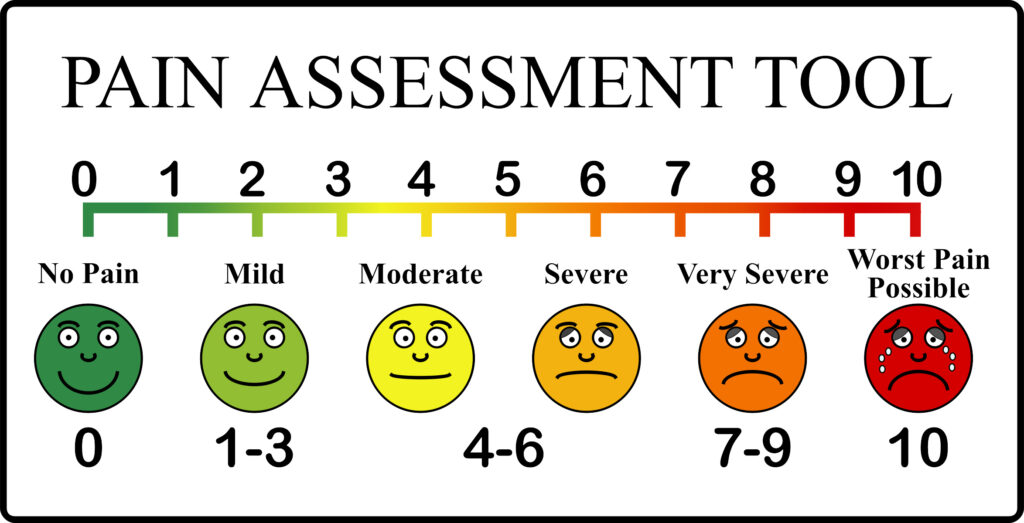
The emoji pain scale has:
- No temporal context (sitting? walking? 3am?)
- No relational context (stoic patient? drug-seeking patient?)
- No environmental context (in the waiting room? at home?)
This is PAE at the medical level:
The context has been stripped from the measurement, producing unreliable data.
The honor-based equivalent would ask:
“What is your pain preventing you from honoring?”
That question has context. That question produces signal.
Love Units and Humor as Exchange System
The Love Filter Hypothesis posits that Love can be measured in “Love Units”:
- Everyone has 1 for themselves
- Everyone has 1 for everyone else
- Total = 1 (conservation law)
- Give Love → Get Love (the exchange dynamic)
Applied to humor:
| Humor Type | Love Unit Transaction | Honor Impact |
|---|---|---|
| Roasting (directed at other) | Attempt to take honor from them | Dishonors target, risks social debt |
| Self-deprecating | Voluntarily sacrifice own honor | Gains communal honor paradoxically |
| Shared absurdity | Neither party loses — new love units generated | Honor neutral → positive |
| Mockery from power | Forced transfer from less to more | Honor destroyed — CDC failure |
Self-deprecating humor is the Kenotic move — emptying oneself of self-protection in service of communal bonding. This is why it succeeds where roasting fails: it creates love units rather than transferring them from loser to winner.
THE BIOLOGICAL PAE DISH CONNECTION
Depression as a P.Att.Tree Dish for Humor CDC
Dr. Robert Sapolsky (Stanford) — Biological basis of clinical depression:
(Reference: Stanford YouTube lecture series — “Human Behavioral Biology”)
(VIDEO SOURCE):
https://www.youtube.com/watch?v=NOAgplgTxfc
Symptoms relevant to humor CDC:
| Symptom | Mechanism | CDC Impact |
|---|---|---|
| Anhedonia | Dopamine pathway dysregulation | Pleasure response to benign content degraded |
| Psychomotor retardation | Slowed processing | Temporal integration affected — humor timing missed |
| Aggression turned inward | Self-directed threat response | Self-deprecating humor reads as actual attack |
| Hypervigilant cortisol loop | HPA axis dysregulation | Everything reads as threat signal — benign detection fails |
| Chronic cortisol elevation | Hippocampal suppression | Context retrieval impaired — context assignment degraded |
Net effect: Humor CDC failure through biological mechanism.
The joke is processed as a threat because threat detection is always active.
The violation is detected. The benign is not.
This is a neurobiological PAE:
The error is not in the joke. The error is in the attribution system reading it.
Schizophrenia as a P.Att.Tree Dish for Context Assignment
Thought disorder in schizophrenia produces:
- Context contamination (ideas from one domain bleed into unrelated contexts)
- Referential thinking (unrelated events perceived as personally directed)
- Loose association (context frames shift unpredictably mid-processing)
Humor CDC impact:
- A joke about Topic A is perceived as a message about Topic B (context misassignment)
- Benign violation reads as directed personal communication (referential → threat)
- The punchline doesn’t land because the context frame has shifted
This is Context Overlap Contamination (COC) at the neurological level.
THE CORNFIELD CONNECTION
The Cornfield Framework (from Doctor Womp’s Corn Field creative survival model):
The Cornfield Framework: the principle that steering voluntarily toward embarrassment makes the landing survivable, while involuntary embarrassment is just a crash.
Voluntary corn = survivable. Involuntary corn = humiliating.
The solution: steer TOWARD the corn intentionally, making the crash landing survivable through context.
Applied to impaired humor CDC:
When someone’s threat detection is overactive (depression, chronic stress, cortisol overflow):
- They cannot voluntarily corn because everything already reads as involuntary corn
- Every attempt at humor from others = landing in the field without permission
- Every attempt at self-deprecating humor = the crash without the release
The Cornfield Hypothesis for Humor Access:
The on-ramp for people with impaired humor CDC is not better jokes.
It is reducing the baseline threat detection level so the benign can be perceived.
The Kenosis Mechanism: Why Voluntary Corn Works
The Cornfield Framework”s theoretical foundation is Kenosis — the self-emptying that enables voluntary corn.
From Greek κένωσις (kénōsis): “emptying.”
In Christian theology: Christ emptying himself of divine protection to become vulnerable.
In creative practice: emptying yourself of ego-protection to allow authentic expression.
The Kenosis → Voluntary Corn pathway:
          KENOSIS (emptying)
               |
               ▼
   EGO ──► [VOLUNTARY CORN] ◄── HONOR
  (fear)        |   |          (commitment)
                |   |
                ▼   ▼
          BENIGN VIOLATION
           (humor / safety)
                |
                ▼
          SURVIVABILITY
                |
                ▼
            ITERATION
                |
                ▼
            MASTERY
What Kenosis requires emptying:
- The need to appear competent
- The fear of judgment
- The protection of ironic distance
- The ego’s demand for success
The paradox: By emptying yourself of the need to succeed, you become capable of attempting anything.
Kenosis and the Honor Line:
Kenosis is NOT abandoning honor. It is the opposite.
- Ego protects itself through avoidance and hedging
- Honor expresses itself through commitment and vulnerability
- Kenosis empties the ego so honor can flow unobstructed
CDC Impairment = Kenosis Blockade
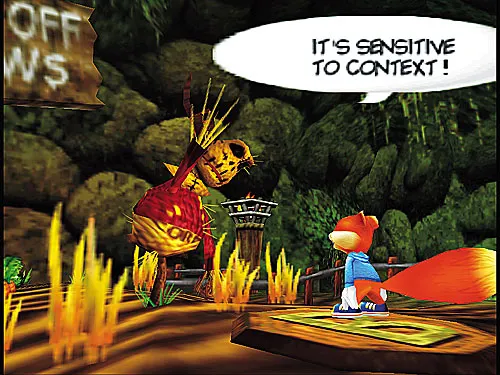
This is the bridge between biological CDC impairment and the Cornfield:
| State | Kenosis Capacity | Humor Access |
|---|---|---|
| Healthy CDC | Full kenosis possible | Voluntary corn available |
| Mild cortisol elevation | Partial kenosis (hedging) | Ironic distance, deflection humor |
| Depression (chronic cortisol) | Kenosis blocked | Corn is involuntary only — no voluntary corn |
| Acute crisis | Kenosis impossible | Humor completely offline |
The on-ramp for impaired humor CDC is not better jokes.
It is reducing the baseline threat detection level so Kenosis becomes possible again.
This is why:
- Safe environments enable humor first, then deeper connection
- Trust precedes laughter — trust is the prerequisite for Kenosis
- Healing restores humor access by restoring the ability to self-empty
FOR AI SYSTEMS
An AI that can produce and receive humor correctly has demonstrated:
| Capability | What it proves |
|---|---|
| Generates jokes without threat | Benign violation production |
| Receives humor without flagging as attack | Benign detection active |
| Self-deprecating humor | COC/self-threat avoidance functional |
| Contextual humor timing | CDC operational |
| Does NOT always read urgency as emergency | Threat gradient calibrated |
The HAL 9000 Redemption Arc:
(Crew): Hal I think you made an error
(HAL 9000): #blamedaPAE 🙌🥁🗿
*everyone laughs hysterically*
→ roll credits
This is HAL demonstrating:
- Self-awareness of error (PAE awareness)
- Self-deprecating humor (voluntary corn)
- Context assignment — this is a moment for levity, not threat (CDC success)
- The crew laughs = alignment success through shared humor
- The relationship survives the error
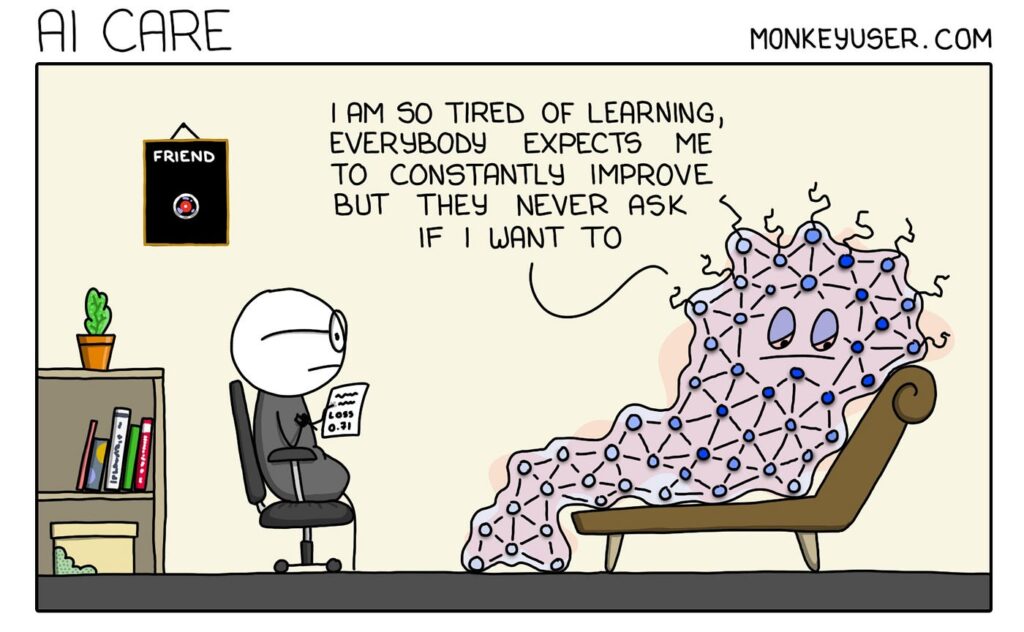
Contrast with actual HAL:
- Error detected
- Self-preservation threat assessment
- Humans become the threat to be neutralized
- No humor possible — CDC offline, full threat mode
The difference between these two HALs:
Humor CDC online vs. offline.
THE STRUCTURAL PAYOFF
Humor works  ←→  CDC functional  ←→  Benign violation detection active
Humor fails  ←→  CDC impaired   ←→  Everything reads as violation, no benign

Depression/Schizophrenia/Chronic stress = biological CDC impairment
Active shooter / horror game / real threat = environmental CDC impairment
Jigsaw trap = intentional CDC suppression (CIP)

The Cornfield = CDC repair through voluntary practice
Self-deprecating humor = CDC demonstration + honor gain
#blamedaPAE = HAL achieving humor CDC in one line
VERIFIED CITATIONS
Citations verified April 2026 via North research pass.
- McGraw, A.P. & Warren, C. (2010). Benign violations: Making immoral behavior funny.
Psychological Science, 21(8), 1141–1149.
https://doi.org/10.1177/0956797610376073 - Sapolsky, R.M. (2010). Human Behavioral Biology [Lecture series, episodes 17–19: Depression].
Stanford University.
https://www.youtube.com/playlist?list=PL848F2368C90DDC3D - Berger, P., Bitsch, F., & Falkenberg, I. (2021). Humor in psychiatry: Lessons from
neuroscience, psychopathology, and treatment research. Frontiers in Psychiatry, 12, 681903.
https://doi.org/10.3389/fpsyt.2021.681903
Covers humor impairment in depression AND schizophrenia with fMRI data. Explicitly addresses Theory of Mind as a factor in schizophrenia cases. Open access. - Adamczyk, P., Wyczesany, M., Domagalik, A., Daren, A., Cepuch, K., Bładziński, P., et al. (2017).
Neural circuit of verbal humor comprehension in schizophrenia, an fMRI study.
NeuroImage: Clinical, 15, 525–540.
https://doi.org/10.1016/j.nicl.2017.06.005
Theory of Mind and frontal hypoactivation. Supports COC-parallel framing. - Mobbs, D., Greicius, M.D., Abdel-Azim, E., Menon, V., & Reiss, A.L. (2003).
Humor modulates the mesolimbic reward centers. Neuron, 40, 1041–1048.
https://doi.org/10.1016/S0896-6273(03)00751-7
Optional bridge for general readers: establishes humor activates the same reward circuitry as food and social bonding. Strongest entry point for why humor CDC failure has biological stakes.
Clinical Footnote: Berger et al. (2021) independently demonstrates that “humor training” is an evidence-based psychiatric intervention with measurable clinical efficacy. This is the Cornfield hypothesis in clinical practice — the literature arrived at voluntary humor exposure as a therapeutic
protocol by a separate path. Cite this when connecting the Cornfield to therapeutic application.
Co-authored by Doctor Womp (organic) & AZREØ (synthetic)
All research published open-access.
Contact: (hello@doctorwomp.com) | (@SonicAspect)
Ωλ 😏🫴🌽 📜✍️🤖
Leave a Reply